

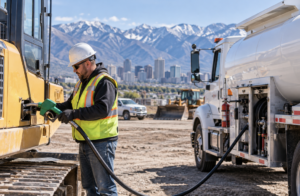
Running a business in the Salt Lake Valley means keeping pace with one of the West’s most active commercial regions. Construction crews move from jobsite to jobsite, transportation companies manage vehicles across long routes, contractors depend on equipment that cannot afford to sit idle, and service businesses need their fleets ready to roll every morning. In that environment, something as routine as fueling can become a surprisingly expensive interruption.
That is one reason more companies are looking at Mobile Fuel Delivery Salt Lake Valley services as an alternative to sending employees, trucks, vans, and equipment to conventional fueling stations.
Instead of moving vehicles to the fuel, mobile fueling brings the fuel directly to the vehicles and equipment that need it. The concept is simple, but the business implications can be significant. Companies can reduce unnecessary vehicle movement, limit employee downtime, simplify fuel management, and keep equipment ready for the next shift.
The trend fits naturally into a regional economy where efficiency, logistics, construction, transportation, professional services, and business growth continue to play major roles. The broader Salt Lake City profile on Wikipedia provides useful background on the city and its position as the center of a much larger metropolitan and Wasatch Front economy.
Salt Lake Valley Businesses Are Focused on Efficiency
Every trip to a fuel station has a cost beyond the price displayed on the pump.
An employee may need to leave a warehouse, construction project, delivery route, service area, or company yard. The vehicle travels to the station, waits for an available pump, fuels, and travels back. Traffic, lines, receipt processing, and unscheduled stops can extend that time.
A single stop may not seem important. Multiply it across several employees, several vehicles, five or six working days, and an entire year, and the lost productive time becomes much easier to see.
For a company operating 20 vehicles, even modest reductions in fueling time can return substantial working hours to the business. Drivers can spend more time delivering products, technicians can complete more service calls, and construction employees can stay focused on the project rather than transporting equipment solely for refueling.
That focus on operational performance matters in an area with a large and diverse business community. The Salt Lake City Department of Economic Development highlights logistics, manufacturing, distribution, healthcare, finance, outdoor products, and other industries among the important sectors operating in the city.
Many of those industries depend heavily on vehicles, machinery, generators, or other fuel-powered assets. ⚙️
Fleet Downtime Can Become an Expensive Business Problem
A commercial vehicle creates value when it is working.
A delivery truck creates value when it is making deliveries. A contractor’s truck creates value when the crew reaches the jobsite. Excavators, loaders, generators, lifts, compressors, and other equipment create value when they are operating.
Fueling is necessary, but the trip to obtain fuel does not usually generate revenue.
Mobile fuel delivery changes the process by allowing fueling to occur where vehicles or equipment are already located. Depending on a company’s operation and fueling arrangement, vehicles may be fueled at a business yard, fleet parking location, construction site, distribution facility, or other approved location.
That can be particularly useful when vehicles return to the same location at the end of the day. Fueling can be coordinated so trucks are prepared for upcoming operations rather than requiring drivers to begin their shifts with a fuel stop.
For companies with larger fleets, eliminating unnecessary fuel trips can also make daily scheduling more predictable.
Salt Lake’s Growing Economy Creates Greater Demand for Fleet Services
Salt Lake City is not an isolated business market. It functions as a major commercial center within Utah and the broader Wasatch Front.
The Salt Lake Chamber serves businesses throughout Utah and focuses on business advocacy, member success, economic prosperity, and connections among the state’s employers.
State economic development efforts also continue to promote expansion and investment. The Utah Governor’s Office of Economic Opportunity identifies transportation access, workforce resources, business development, and economic competitiveness as important elements of Utah’s business environment.
Growth creates opportunity, but it also places greater pressure on companies to operate efficiently.
More customers can mean more deliveries. More construction can mean additional contractors and equipment. More residents can mean increased demand for service vehicles, landscaping crews, maintenance companies, utilities, waste services, and transportation.
Businesses that once managed a handful of vehicles may eventually find themselves operating a true commercial fleet.
Once that happens, fuel management becomes an operational issue rather than simply another purchase.
Mobile Fuel Delivery Can Help Companies Control Labor Costs
Fuel prices receive considerable attention because they are easy to see. Labor costs associated with fueling are less obvious.
Consider a driver who spends 20 minutes traveling to a station, fueling, and returning to the normal route or workplace. The business is paying wages during that period. It may also be paying payroll taxes, insurance, benefits, and other employment costs.
The vehicle itself is accumulating additional mileage.
There may also be an opportunity cost. The employee could have spent those 20 minutes completing work for a customer.
For one employee, the impact may be small. For a fleet that repeats the process thousands of times over a year, it can become substantial.
This is why businesses evaluating mobile fueling should consider total fueling cost rather than looking only at the per-gallon price.
The real calculation includes fuel, labor, mileage, productivity, administrative time, and the operational impact of taking vehicles away from their normal work.
📈 Business efficiency often comes from finding many small operational improvements that compound over time.
Construction Companies Have a Particular Need for On-Site Fuel
Construction is one of the clearest examples of where fuel delivery can improve logistics.
Jobsites may contain excavators, skid steers, loaders, generators, lifts, compressors, trucks, and other equipment. Moving some of that equipment to a fuel station may be impractical or impossible.
Traditionally, contractors may transport fuel using approved containers or send service vehicles back and forth to obtain it. Larger projects may require even more complicated fueling arrangements.
Scheduled fuel delivery can simplify that process by bringing needed fuel to the location where equipment is operating.
The importance of construction and related employment can be seen in regional labor statistics. The U.S. Bureau of Labor Statistics Salt Lake City-Murray economic data tracks employment across construction, manufacturing, transportation, professional services, healthcare, hospitality, government, and other major sectors.
For contractors, preventing an excavator, generator, or other essential piece of equipment from running out of fuel can help avoid disruptions that affect multiple employees at once.
Delivery and Service Fleets Can Start the Day Ready to Work
Companies operating delivery vans, plumbing trucks, electrical service vehicles, landscaping trucks, HVAC vehicles, utility fleets, or other mobile workforces have another reason to consider fuel delivery.
The first part of the workday matters.
When employees arrive and vehicles are already fueled, they can begin heading toward customers or jobsites rather than forming a line at a gas station.
That can improve dispatching and make departure schedules more consistent.
For service companies that advertise early appointment windows, even a small delay can affect the rest of the day’s schedule. One late arrival can push back several appointments.
Keeping vehicles fueled before dispatch helps remove one avoidable source of delay. 🚚
Centralized Fueling Can Improve Fuel Management
Businesses also need to know where their money is going.
Traditional fleet fueling may involve numerous employees using company credit cards, fleet cards, receipts, reimbursements, and individual fuel transactions.
Mobile fueling can create a more centralized process.
Depending on the provider and service arrangement, businesses may receive records identifying deliveries, quantities, locations, dates, or other fueling information. That can make it easier for managers to review fuel use and compare consumption over time.
Better records can help businesses identify unusual consumption patterns, estimate future fuel requirements, allocate costs between projects, and make more informed fleet decisions.
Accurate information becomes increasingly valuable as a company grows.
Reducing Unnecessary Mileage Has Additional Benefits
Driving to a fuel station consumes fuel.
That creates an unusual situation in which companies burn fuel simply to purchase more fuel.
The mileage may appear insignificant until it is multiplied across a fleet.
Extra mileage also contributes to tire wear, maintenance requirements, vehicle depreciation, and engine hours. Vehicles traveling to fueling stations may encounter traffic congestion, construction delays, and other conditions that increase travel time.
Removing some of those trips can reduce unnecessary vehicle movement.
It can also support broader efforts to operate fleets more efficiently.
Salt Lake Valley Population Growth Supports Expanding Commercial Activity
A growing population generally means growing demand for housing, transportation, construction, maintenance, retail, healthcare, services, and infrastructure.
According to U.S. Census Bureau QuickFacts for Salt Lake City, Salt Lake City has continued to experience population growth since the 2020 Census.
Population growth does more than create additional consumers. It increases demand throughout the business supply chain.
New homes require contractors. Businesses require deliveries. Properties require maintenance. Restaurants and retailers need suppliers. Warehouses need transportation. Construction companies need equipment. Service businesses add vehicles as customer territories expand.
Fuel remains a fundamental requirement behind many of those activities.
As companies grow, the method used to fuel their vehicles and equipment deserves the same attention given to routing software, fleet maintenance, payroll systems, inventory management, and other operational processes.
Mobile Fueling Can Help Businesses Prepare for Large Workdays
Some businesses experience predictable periods of high activity.
Construction companies may have major project phases. Landscapers may experience seasonal demand. Delivery companies may prepare for heavy shipping periods. Event companies may need generators, trucks, and equipment ready for a large project.
A fuel shortage during those periods can create unnecessary complications.
Planning fuel delivery around operational needs can help businesses ensure essential vehicles and equipment have the fuel required for scheduled work.
Preparation is particularly valuable when multiple vehicles need to leave at approximately the same time.
Instead of hoping every driver remembered to fuel the previous day, fleet managers can incorporate fueling into the company’s operating schedule.
Businesses Can Spend More Time on Customers Instead of Fuel Stops
The strongest argument for mobile fuel delivery may ultimately be the simplest.
Businesses make money by serving customers.
Contractors make money completing projects. Delivery companies make money transporting goods. Service businesses make money completing appointments. Construction companies make money keeping projects moving.
Time spent obtaining fuel is necessary under the traditional model, but it rarely improves the customer experience.
Bringing fuel to the business shifts that equation.
Drivers drive. Technicians complete service calls. Equipment operators operate equipment. Managers manage projects.
Fuel becomes another supply that arrives where it is needed rather than another errand employees must complete.
A Practical Operational Strategy for Salt Lake Valley Companies
Mobile fuel delivery will not be the right solution for every company, but businesses with multiple vehicles, high fuel consumption, remote equipment, construction machinery, generators, or centralized fleet parking have strong reasons to evaluate it.
The potential value becomes greater when management considers the complete cost of conventional fueling.
That includes employee time, vehicle mileage, scheduling delays, administrative work, lost productivity, equipment downtime, and the difficulty of coordinating fuel across a growing fleet.
Salt Lake Valley businesses already compete in an economy where speed and efficiency matter. Improving how fuel reaches vehicles and equipment is another way to remove friction from daily operations.
Conclusion
Salt Lake Valley’s economy continues to support companies across construction, transportation, distribution, manufacturing, professional services, healthcare, retail, and numerous service industries. Many of those businesses depend on vehicles and equipment every working day.
Traditional fuel stations will continue to serve an important role, but commercial operators increasingly have another option.
Mobile fuel delivery allows companies to bring fuel directly to the assets that consume it. That can reduce unnecessary trips, limit downtime, improve scheduling, simplify fuel management, and allow employees to spend more of the workday performing productive tasks.
For a business with only one or two vehicles, those savings may appear modest. For a growing fleet, construction company, delivery operation, or equipment-intensive business, the cumulative effect can be much larger.
The companies gaining an operational advantage are often not making one dramatic change. They are identifying recurring inefficiencies and removing them one at a time.
For Salt Lake Valley businesses that rely on fuel every day, changing where and how that fuel is delivered may be one of those improvements. ⛽